





Pulski Filmski Festival
- festival
- Festival editions
- Filmography (0)
- Soundtracks
- Awards
- Related people
- Related organizations
About
Contacts
Gallery (3)
Materials
Dnevnik (1951- )


Festival editions
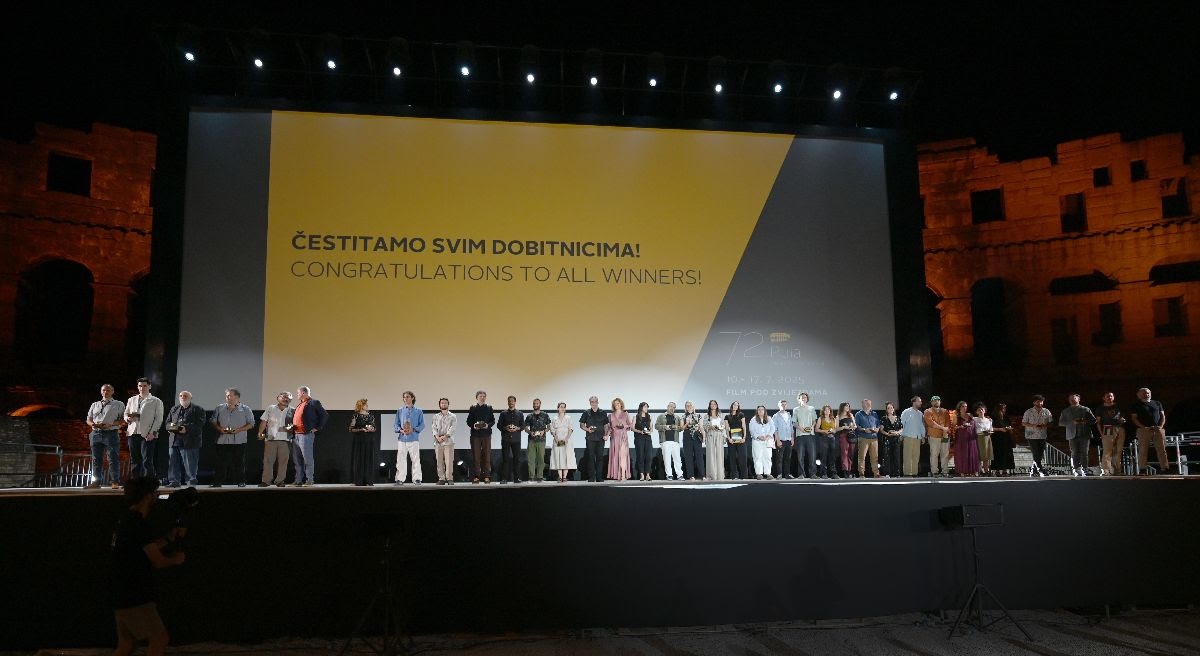
72. Pulski Filmski Festival (2025)
Julij Zornik uses the impressively designed sound landscape to create a sense of the looming danger of the river, suggesting a feeling of tension and unease. These are countered by soft music motives that paint the characters’ inner world, underlining the emotional depth of the story.
By turning the citizens of Rijeka into historic figures, the make-up in the film Fiume o morte! simultaneously evokes the historic episode and serves as an instrument of irony, becoming one of the key elements creating the original world of this hybrid documentary film.
The sequences created with visual effects in the film Dražen sum up the passage of time and connect parts of the story, serving as a visually attractive break in the story at the same time.
Domas Strupinskas’ music in Sandbag Dam is subtly woven into the rhythm of the film, and it is this restraint that makes it seem powerful and suggestive, as it follows the emotional charge of the story growing like the river that swells.
The costumes in the film Fiume o morte! paint the historical period on the one hand, and on the other hand, give the film a layer of irony, as well as critical commentary with their occasional deliberate and humorous awkwardness.
By bringing together the past and the present and placing historical elements in contemporary spaces, the production design in Fiume o morte! creates a humorous and absurd contrast that makes the film richer in therms of visuals and meaning.
In his restrained acting, Andrija Žunac carries the weight of loss, disapproval, and unspoken emotions, leaving a powerful impression with his unobtrusive presence.
With her suggestive portrayal of a mother who is caring and also overprotective at the same time, Zrinka Cvitešić plays a layered and emotionally convincing role.
Balancing between his own emotions and expectations of the people around him, between strength and fragility, Lav Novosel is commanding in his debut role and shows incredible confidence. By slowly yielding to his suppressed emotions that gush like a flood, he makes us strongly relate to his character.
The casting for Fiume o morte! brilliantly brings together fiction and reality, turning the casting process itself into the key dramatic element of the film. By including the citizens of Rijeka and employing an autoironic approach, the cast becomes the extension of the directorial idea, providing the film with complexity and wit.
The dedication of the production of Fiume o morte! supported the demanding directorial concept and carried the huge endeavour of merging the past and the present, massive scenes, non-professional actors, and costumed action, allowing for a unique cinematic achievement.
By using various registers of style – from surrealism and irony to humour and ingenuity, skilfully linking fiction and documentary with directing that controls the wealth of material from the first moment to the end and accurately shapes the rhythm and tone of the film, Igor Bezinović has made a playful film that entertains, questions, and eludes expectations all at once.
Editing by Vladimir Gojun in the film Little Trouble Girls emphasises the nuances of verbal, and especially nonverbal communication between the main characters in a subtle way, building on their relationships through silences, gazes, and absences. His precise rhythm also establishes a delicate balance between the girls and the nature surrounding them, contributing to the poetic atmosphere and layers of the film.
Just another night at a petrol station becomes an allegory of a microcosm that reflects all solitude, boredom, everyday life, and hopelessness of the territory of former Yugoslavia.
Screenings
71. Pulski Filmski Festival (2024)
Screenings
70. Pulski Filmski Festival (2023)
“Fiume o morte” – 6.000 EUR Festival
In the film The Happiest Man in the World, Jelena Kordić has created a fascinating character that gradually, with long, exact restraint, reveals her external and internal scars, creating an arch from the carefully build facade, through the impressive breakdown, to the final confrontation.
Juraj Lerotić has directed a moving personal story in a suggestive and elegant way, using precise film language and completely avoiding sentimentality, and has created a feeling of suspense until the last shot and an intensive, almost irrational hope that we will somehow avoid the unavoidable outcome. This feeling of not only sympathy, but also being emotionally invested in the fate of the characters stays with us long after the film is over.
Playing Damir, Goran Marković takes on a big responsibility of building a claustrophobic world of a man who finds merely existing unbearable. He fills every frame with pulsating vulnerability and accurately materialises distrust that is stopping him from accepting help also from those who desperately want to help him. After watching this film, we are closer to understanding the human experience that many cannot identify with, makin Goran Marković’s portrayal a great feat of acting.
With subtle and unobtrusive decisions, Marko Brdar builds an atmosphere of continuous suspense in this personal, chamber film. With great respect for the story, he occasionally obstructs the content and gives the characters the right to privacy, and occasionally brings us close, giving us access to the very core of the intimate drama.
Adnan Omerović has created a character that is visibly and disturbingly torn by an overwhelming feeling of guilt for the dramatic events from the past. The neurosis felt in his whole being tangibly depicts the conflicted state of mind of a man haunted by events he was a part of both as victim and as aggressor.
Screenings
69. Pulski Filmski Festival (2022)
Screenings
68. Pulski Filmski Festival (2021)
Obrazložitev (hrvaško): Za veliki doprinos atmosferi. Odlično ukomponirani zvuk zajedno sa slikom pruža snažan audiovizualan doživljaj.
Obrazložitev (hrvaško): Za jaku atmosferu koju Brdar dovodi do granice vidljivosti te ju kontrolirano koristi interijeru i eksterijeru.
Screenings
67. Pulski Filmski Festival (2020)
Minority co-production competition.
Minority co-production competition.
Highest possible score of 5.0. The award is donated by the city of Pula.
Screenings
66. Pulski Filmski Festival (2019)
Prize awarded by Zagrebačka banka in the amount of HRK 30,000.
Utemelljitev hrvaško: "Ocjenjivački sud posebno pohvaljuje glumicu Juditu Franković Brdar za kreiranje izuzetno kompleksnog glavnog lika predočenog velikom ekspresivnošću u filmu Izbrisana, redatelja Mihe Mazzinija."
“For the maturity achieved in creating a disquieting and touching story about an extremely difficult topic and the emotional transformation of the main character.”
Paket poprodukcijskih storitev v višini 15.000 EUR
Hrvaško: „Autori su na primjeren način pristupili važnoj povijesnoj temi i u njezinu relevantnost uvjerili gledatelja. “
Hrvaško: „Preciznim redateljskim rukopisom uspjela je gledatelja u potpunosti uvući u filmska zbivanja, karaktere, događaje i društvene okolnosti.“
Hrvaško: „Minimumom izražajnih sredstava prikazala je širok raspon emocija i utjelovila kompleksan lik.“
Hrvaško: „Evokativna glazba je uspjela podcrtati emocije likova, dočarati tjeskobu rata I gledatelja uvući u više desetljeća udaljena zbivanja.“
Hrvaško: „Precizna montaža usuglasila je sve segmente filmskog pripovijedanja I oblikovala ritmičnu strukturu čitave cjeline.“
Hrvaško: „Snimateljski rad je izvrsnim odabirom planova, objektiva, kompozicija i svjetla uspio pridonijeti protočnosti priče I uvjerljivosti atmosfere.“
Hrvaško: „Autorica je na uvjerljiv način spojila igrano, dokumentarno i arhivsko te retorički uvukla gledatelja u zbivanja.“
Croatian: „Žanrovski zahtjevi filmske priče tražili su mnogo invencije i znanja pri stvaranju vizualnih efekata a to su autori u svom radu i pokazali.“
ocena: 4,9
Screenings
65. Pulski Filmski Festival (2018)
hrvaško: Fizičkom boli uslovljena, još više emotivnom traumom pritisnuta, protagonistica filma Ivan utjelovljuje nevjerojatnu snagu majčinskog instinkta.
Croatian: Zahvaljujući izvrsnom dramskom tekstu i nadahnjujućoj igri cjelokupnog glumačkog ansambla, dobili smo izuzetno uspjeli filmski prikaz poslijeratnih trauma likova koji su nam na taj način postali izuzetno bliski i prepoznatljivi.
Croatian: Za minimalistički pristup režiji koja, uz mali broj glumaca, scena i lokacija, ostavlja snažan emocionalni utisak na gledatelja.
Screenings
64. Pulski Filmski Festival (2017)
hrvaško: „Aktualna i intrigantna „ljubavna priča o mržnji“. Životne, zaokružene i u hrvatskoj svakodnevici ukorijenjene likove autori scenarija na human, empatičan i duhovit način suočavaju s vlastitim predrasudama, nesigurnostima pa i mržnjama, navodeći ih na upoznavanje drugih i drugačijih, onih sa suprotnog etničkog, idejnog, ideološkog i svjetonazorskog pola, te na međusobnu toleranciju i prihvaćanje.“
hrvaško: „Za suptilnu i nenametljivu ugođajnost koja filmskoj priči ovoga djela stvara vizualni okvir u kojoj se ona tako suvereno razvija.“
hrvaško: „Lik zagrebačkog intelektualca koji je obilježen obiteljskom anamnezom, manjinskim seksualnim statusom i pripadnošću etničkoj većini, Nebojša Glogovac dočarava s osobitom suptilnošću. Spretno balansira humorom i oporošću, cinizmom i empatijom, muževnošću i feminiziranošću.“
hrvaško: „U svakoj sceni filma Ustav Republike Hrvatske u kojoj se pojavljuje, Dejan Aćimović u liku Ante Samardžića vrhunskom glumačkom vještinom osvaja pozitivizmom, altruizmom i pitkim humorom.“
Screenings
63. Pulski Filmski Festival (2016)
Screenings
62. Pulski Filmski Festival (2015)
Croatian: „Za uvjerljivu izvedbu lika male djevojčice velikog srca koja u sebi nosi važnu poruku o ljubavi i strasti.“
„Za film koji ima sposobnost doprijeti do gledatelja sa svojom porukom kroz odlično artikuliranu narativnu strukturu i originalne glumačke izvedbe .“
hrvaško: „Za majstorski jednostavan, precizan i uvjerljiv prikaz složenih međuljudskih odnosa izazvanih tragičnim povijesnim zbivanjima.“
„Za kostime koji se prilagođavaju i odražavaju promjene ljudske vanjštine kroz tri desetljeća na zatajan, ali učinkovit način u skladu s pričom o kontinuitetu ljudske privlačnosti, ljubavi i mržnje.“
„Za snažnu fizičku izvedbu koja glavnim glumcima daje još kompleksniju povijesnu i psihološku dimenziju.“
hrvaško: „Za višeslojnu izvedbu osobe rastrgane između traumatične prošlosti i probuđene želje za novim početkom.“
Croatian: „Za savršenu tehničku izvedbu u ključnoj sceni u kojoj psihološki pakao protagonista dobiva i svoju fizičku metaforu.“
Croatian: „Za savršeno modernu orkestraciju i upečatljive gitarske motive kojima stvara predivnu glazbu.“
Croatian: „Za majstorsku fotografiju koja izvlači skrivene emocije protagonista na površinu istovremeno zadržavajući psihološku napetost priče.“
ocena: 4.85
Screenings
61. Pulski Filmski Festival (2014)
„Za majstorsku fotografiju zahtjevnih noćnih situacija koja doprinosi napetoj atmosferi filma.“
hrvaško: „Za sugestivan portret čovjeka opterećenog zločinom iz prošlosti i samoćom.“
hrvaško: „Za izvrsnu izvedbu uloge mladića koji donosi tešku odluku s čijim se posljedicama mora suočiti.“
Screenings
60. Pulski Filmski Festival (2013)
Diploma najboljem filmu u sekciji manjinskih koprodukcija.
„Srdan Golubović guides a film with several plot layers, double timeline and a number of excellent characters in a masterly manner. From all aspects, this is an example of refined filmmaking.”
„A powerful film about the force of evil, goodness and forgiveness that reminds us that heroic acts are worthwhile and that sacrifice is not futile.”
„Behind the soft and warm family man there is a firm character that convinces us that goodness is universal.”
Screenings
59. Pulski Filmski Festival (2012)
Žirija filmskih kritikov Evrope i Mediterana FEDEORA.
hrvaško: „Lik Safije morao je mučno birati između oca i muža i između dvije vjere i nacije, a Olga Pakalović uvjerljivo je glumi, s tjeskobom osobe koja nikada neće znati je li dobro izabrala.”
Screenings
58. Pulski Filmski Festival (2011)
Ekipi filma za najbolje glumačko ostvarenje.
hrvaško: Cijela glumačka ekipa trijumfirala je ruku pod ruku u ovom zaista fantastičnom spoju suptilnosti, terora, farse i nježnosti – izvanredno rječitog, a bez ijedne izgovorene riječi.
Nagrada za manjšinsko koprodukcijo.
hrvaško: Filmskim suvremenim sredstvima nenametljivo prikazuje univerzalne prepoznatljive emocije.
hrvaško: Minimalnim glumačkim sredstvima pokazala je unutarnji nemir i snagu lika.
hrvaško: Zbog precizne i točne režije filma koji ne bježi od emocija.
Screenings
57. Pulski Filmski Festival (2010)
Screenings
56. Pulski Filmski Festival (2009)
55. Pulski Filmski Festival (2008)
53. Pulski Filmski Festival (2006)
Screenings
51. Pulski Filmski Festival (2004)
Screenings
39. Pulski Filmski Festival (1992)
37. Pulski Filmski Festival (1990)
Za kvalitete globalnog produkcijskog dizajna domaćeg filma.
Screenings
36. Pulski Filmski Festival (1989)
Screenings
35. Pulski Filmski Festival (1988)
34. Pulski Filmski Festival (1987)
Screenings
33. Pulski Filmski Festival (1986)
Screenings
32. Pulski Filmski Festival (1985)
Screenings
31. Pulski Filmski Festival (1984)
Screenings
30. Pulski Filmski Festival (1983)
Screenings
29. Pulski Filmski Festival (1982)
Screenings
28. Pulski Filmski Festival (1981)
27. Pulski Filmski Festival (1980)
Za režiju, kameru i montažu filma Splav meduze.
Screenings
26. Pulski Filmski Festival (1979)
Screenings
25. Pulski Filmski Festival (1978)
Screenings
24. Pulski Filmski Festival (1977)
Za kameru u filmovima Mećava, Vdovstvo Karoline Žašler i Hajdučka vremena.
Screenings
23. Pulski Filmski Festival (1976)
Za masku u filmovima Idealist i Seljačka buna 1573.
Screenings
22. Pulski Filmski Festival (1975)
Za uloge u filmovima Strah, Doktor Mladen i Pavle Pavlović.
Screenings
21. Pulski Filmski Festival (1974)
Screenings
20. Pulski Filmski Festival (1973)
Screenings
19. Pulski Filmski Festival (1972)
Screenings
18. Pulski Filmski Festival (1971)
Za ton u filmovima Na klancu, Tko pjeva zlo ne misli i U gori raste zelen bor.
Za suvremenu, socijalnu i životnu temu.
Screenings
17. Pulski Filmski Festival (1970)
Screenings
16. Pulski Filmski Festival (1969)
Za originalnu režiju filma Sedmina (Pozdravi Marju).
Screenings
14. Pulski Filmski Festival (1967)
Screenings
13. Pulski Filmski Festival (1966)
Za režijo filma z aktualno tematiko.
Screenings
12. Pulski Filmski Festival (1965)
Screenings
11. Pulski Filmski Festival (1964)
Screenings
10. Pulski Filmski Festival (1963)
Filmsku adaptaciju novele Prežihova Voranca Samorastniki
Screenings
9. Pulski Filmski Festival (1962)
Pohvala za suvremenost tematike.
Screenings
8. Pulski Filmski Festival (1961)
Triglav film za umjetnički najodabraniji repertoar.
Screenings
7. Pulski Filmski Festival (1960)
Screenings
6. Pulski Filmski Festival (1959)
Veljko Bulajić i Igor Pretnar, mladim redateljima za rezultate traženja, kvalitetu i tendencije u filmovima Vlak bez voznog reda i Pet minuta raja
Screenings
5. Pulski Filmski Festival (1958)
Screenings
4. Pulski Filmski Festival (1957)
Screenings
3. Pulski Filmski Festival (1956)
Screenings
2. Pulski Filmski Festival (1955)
Screenings
1. Pulski Filmski Festival (1954)
Screenings
Revija stranih filmova u Areni (1953)
Extended data
Contact the editors
If you need to get in touch, please use the form below. We will be happy to hear from you.