SLOVENIAN FILM DATABASE
DO NOT MISS!
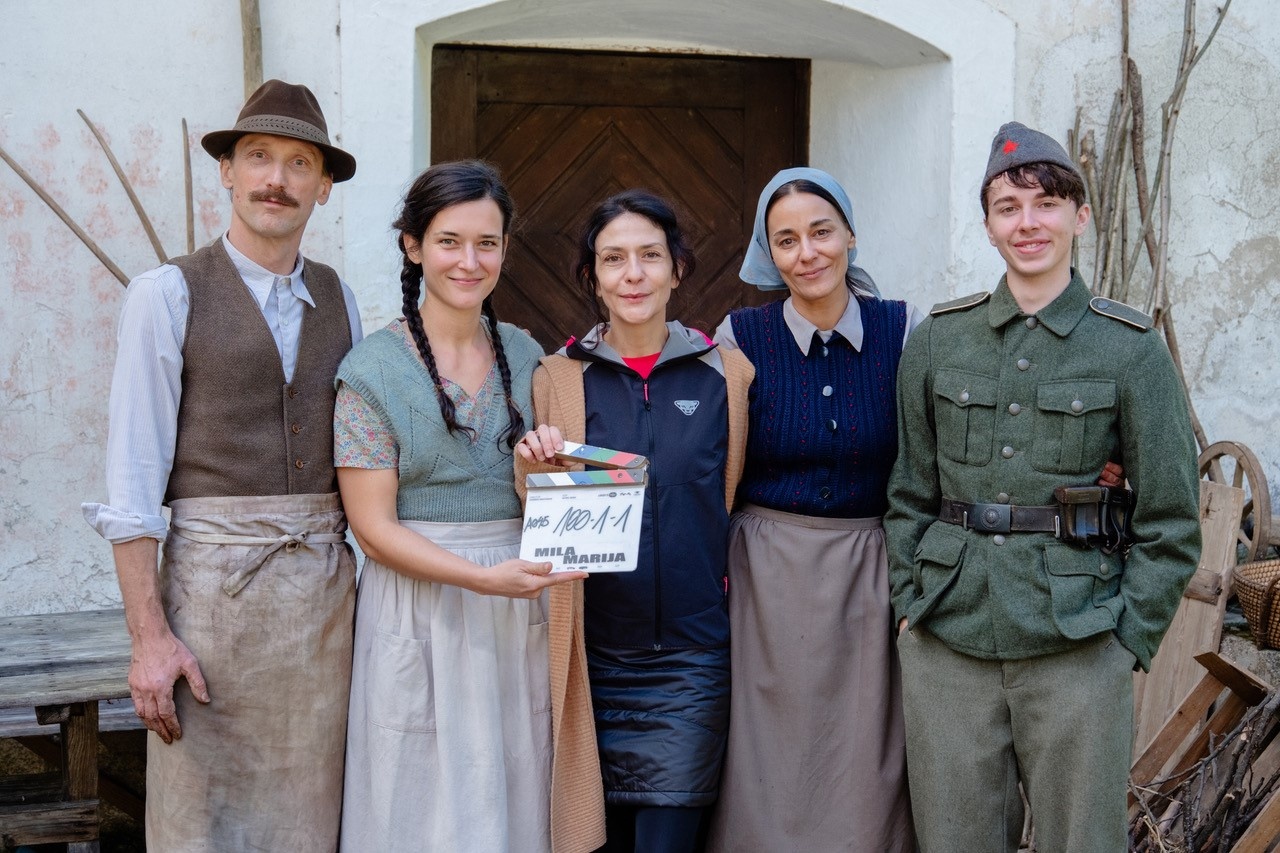
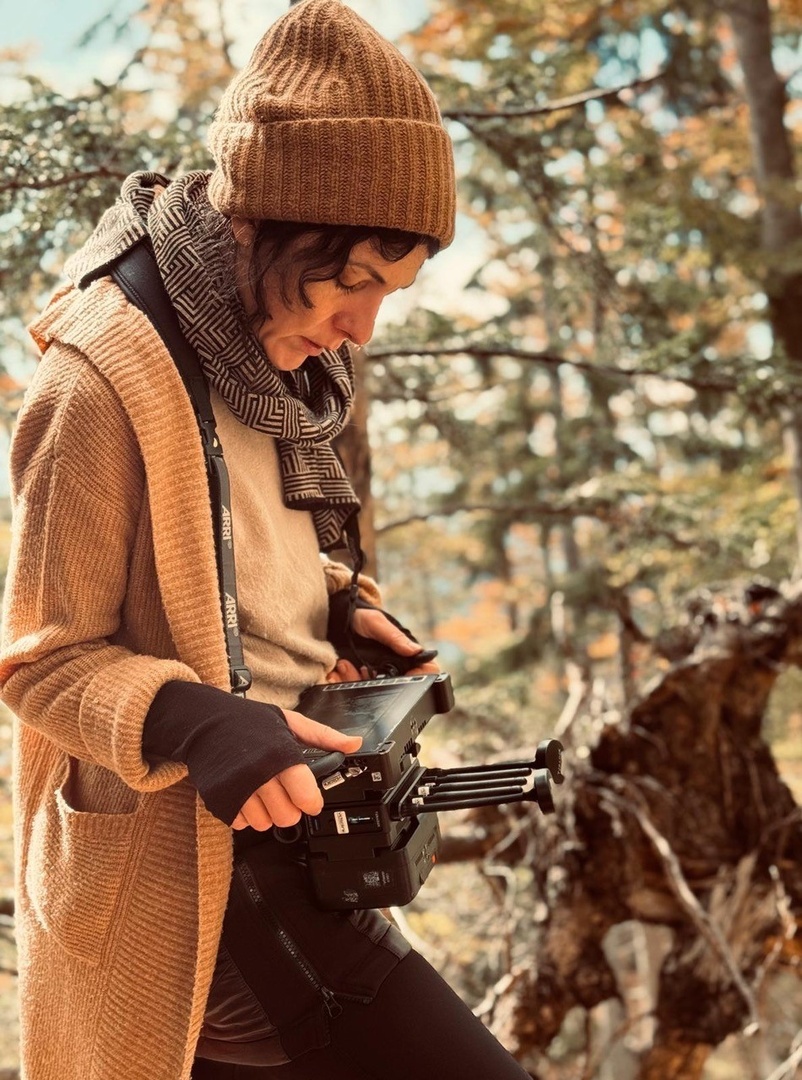
The filming of the new feature film Mila/Marija, directed and written by Andrina Mračnikar, has just begun in Globasnica and the surrounding forests in Carinthia, Austria. Andrina says the following about her new film: “With Mila/Marija, I wish to make the first feature film dedicated to the history of the Slovenian national community and the resistance of the Carinthian Partisans against Nazism. The project is also important to me personally, as the story of the Carinthian Slovenians and the anti-fascist resistance is part of my family history. My goal is to create films with a clear stance that ask crucial questions and are simultaneously emotionally powerful, formally consistent, and courageous.” Filming will take place around various cities, towns, villages, and forests in Carinthia and Slovenia until mid-November.
A village in Carinthia, 1943. Nineteen-year-old Mila (Doroteja Nadrah) joins the Partisans together with her brother Hanzi (Oskar Haag) to fight the Nazis from the shelter of the forests. Mila quickly assumes command of a resistance unit and faces life-or-death decisions. When she returns home after the liberation and wants to start a new life, she once again has to tackle the question of whether to resist or adapt.
Mila/Marija boasts a talented international cast. The Slovenian actress Doroteja Nadrah plays the leading role of Mila; her brother Hanzi is portrayed by Oskar Haag, a popular Austrian singer and theatre and film actor; her father is brought to life by Marko Mandić, an internationally experienced Slovenian film and theatre actor; while the actress and musician of Bosnian roots, Edita Malovčić, who is renowned in Austria, is Mila’s mother. Petja Labović, a successful Slovenian actor of the younger generation, plays the role of Lenart, while Croatian star Leon Lučev completes the main cast as Stane.
Other major roles are played by several other well-known Slovenian actors, including Jurij Drevenšek, Anuša Kodelja, Jure Henigman, Nina Valič, Urban Kuntarič, Timon Šturbej, Tina Potočnik Vrhovnik, Saša Tabaković, Minca Lorenci, Mateja Pucko, Staša Popović, Michael Krištof Kranzelbinder, and France Mandić. The film also features a number of child and youth actors from both Slovenia and Austrian Carinthia: Evelin Cetin, Ray Ferenac, Luna Sturm, Julija Zita Jemec, Inigo Wrolich, Mira Koncilia, Laura Sakač-Poprask, and Oskar Perpar.
The film, which is deeply inspired by the director’s family history, is co-produced by the Slovenian production company Vertigo (producers Danijel Hočevar and Katja Lenarčič), the Austrian Amour Fou (producers Alexander Dumreicher-Ivanceanu and Bady Minck) and the Greek company Indigo View (producer Ioanna Davi).
At the beginning of the film shoot, the Slovenian producers said: “The story of Mila/Marija is multilayered. It is not only an intimate story of a young woman facing impossible choices in difficult circumstances, but it also preserves an essential part of the collective memory within the historical context. In light of today’s circumstances, as intolerance and authoritarianism rise again across the world and minority voices face increasing pressure, the film acts as a valuable reminder of freedom, solidarity, and individual and civic courage."
The Austrian producers added: “The film highlights an important part of the history of Carinthia, Austria, Slovenia, and Europe: the relentless resistance of thousands of women and men against the Nazi regime. Andrina Mračnikar’s film is set in Carinthia, where the Slovenian-speaking population has lived for centuries. After 1938, when Hitler assumed power in Austria, discrimination and deportation of many Slovenian families increased sharply. Simultaneously, the Austrian Partisans mounted a formidable resistance. Yet, their story – which is the tale of freedom fighters, many of whom were women – has never been depicted on screen. The film Mila/Marija will thus present their story to Austrian, Slovenian, and international audiences.”
The film crew includes script editors Barbara Albert and Jürgen Karasek, director of photography Georg Weiss, sound recordist Aljaž Lukan, production designer Miha Knific, costume designer Sandra Žigová, makeup designer Michaela Payer, composer Tomaž Grom, editor Karina Ressler, and sound designer Julij Zornik.
Mila/Marija achieves several notable milestones, as it is the first feature film exploring the history of the Carinthian Slovenians’ resistance against the Nazi dictatorship. It is also the first feature film to focus on the resistance movement in Austria during World War II, as well as the first live-action feature to be co-produced by Slovenia and Austria, with the involvement of several funding providers: Slovenian Film Centre, Austrian Film Institute (ÖFI and ÖFI+), Hellenic Film and Audiovisual Centre, Slovak Audiovisual Fund – cash rebates, Vienna Film Fund, Carinthia Film Commission, and Future Fund of the Republic of Austria.
The film is co-produced by RTV Slovenija and the Austrian public broadcaster ÖRF, in cooperation with Viba Film Studio. It is expected to be released in cinemas in both countries next year.
Source: Slovenian Film Centre