SLOVENIAN FILM DATABASE
DO NOT MISS!
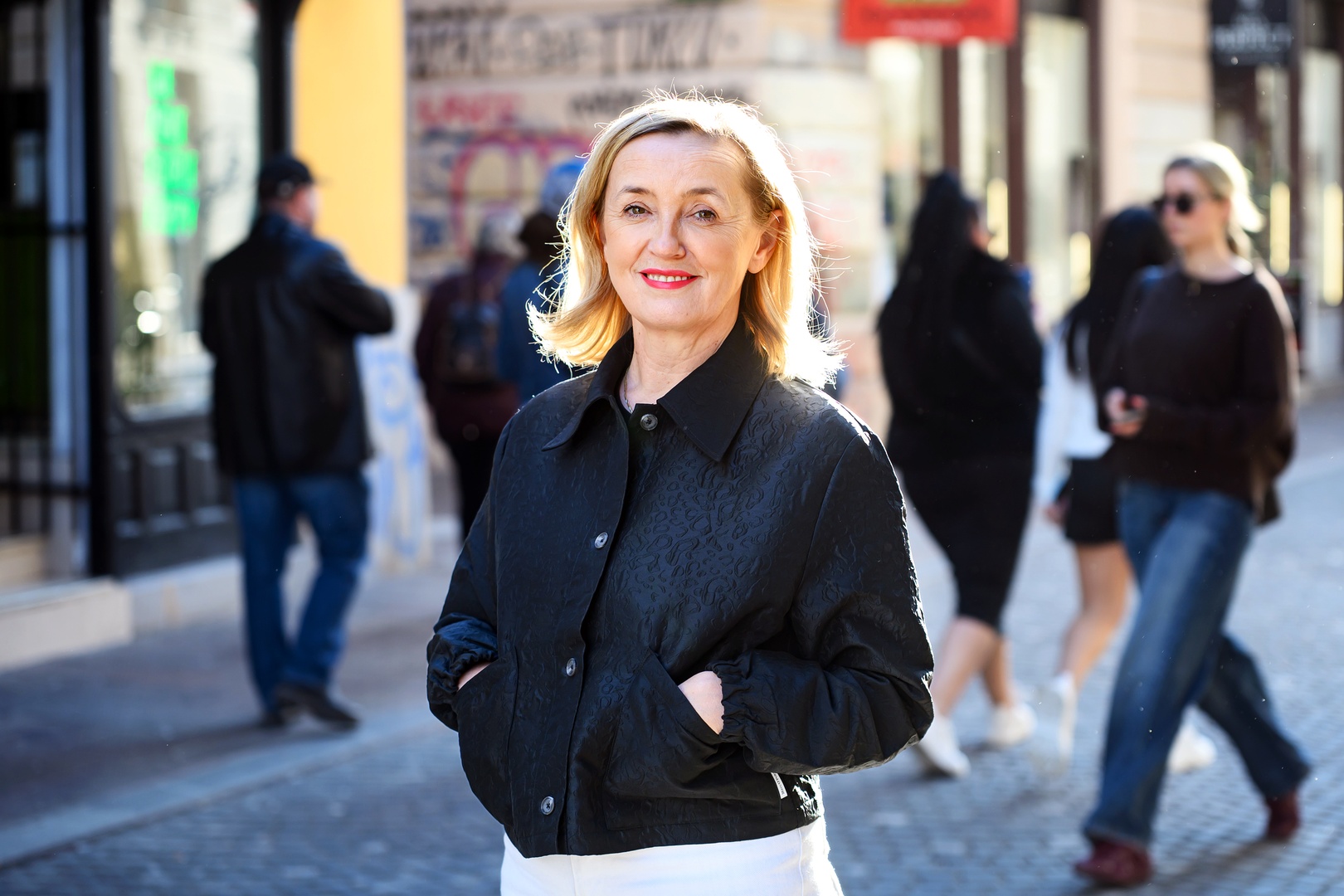
Interview with Managing Director Nataša Bučar for the first edition of our Magazine The Roll. After nearly a decade at the helm of the Slovenian Film Centre she reflects on how Slovenian cinema has changed and what it still needs in order to go further.
Nataša Bučar has led the Slovenian Film Centre since December 2016. During this period, Slovenian cinema has significantly strengthened its international profile, public investment in film has increased, women directors have become more visible, and animation has emerged as one of the country’s most internationally successful and distinctive fields. In March 2026, she was also appointed Slovenia’s representative to the Eurimages Board of Management, further underscoring her active role within the wider European film landscape.
In this conversation, she reflects not only on nearly a decade at the helm of Slovenia’s central film institution, but also on broader questions surrounding the place of Slovenian cinema internationally: the conditions in which films are made, the growing presence of new creative voices, the importance of festival visibility, the importance of distribution and the directions future development might take.
How do you see the position of Slovenian cinema in the international landscape today? It seems to me that Slovenian cinema is more visible today than ever before, and that within European cinema we have become far more recognisable. At the same time, it still faces a number of challenges, some rooted in the fact that, for decades, our films were made under very poor conditions, incomparably worse than those in many other European countries. As a result, a great deal was lost in terms of international presence and our filmmakers' ability to establish themselves abroad, and that is by no means a minor matter. Even a single international breakthrough can launch not only an individual career but also open doors for a national cinema as a whole.
Slovenian cinema has undeniably gained a new character and greater international confidence. That is an important shift. At the same time, it remains clear that international reach, recognition of filmmakers, and the production value of films are all directly linked to the conditions under which they are made.
What, in your view, most defines Slovenian cinema at this moment, both in terms of content and production? In recent years, Slovenian cinema has increasingly been shaped by debut features, and that can be an extremely positive development. First films are always fresh works by new filmmakers, and they tend to generate considerable international interest. Indeed, it is precisely through debuts and often through short films as well that we have achieved some of our most visible international breakthroughs in recent years.
I think critics and festival selectors who follow our cinema would probably say exactly that: it is the first films of new filmmakers that have drawn the most attention lately. Within this wave of new voices, women directors have also come to occupy a very important place, opening doors to festivals and distribution opportunities that had often remained closed before.
Looking back on your nearly ten years at the head of the Slovenian Film Centre, which developments do you see as the most important? I hope that the greater international visibility of Slovenian cinema is, at least in part, also the result of my work and of the goals I set for myself at the beginning of my first term. My central aim was to improve the conditions in which Slovenian film is made and in which Slovenian filmmakers work.
From that perspective, one particularly important shift has been the substantial increase in funding for Slovenian film, from four million euros at the start of my first term to just over thirteen million today. I am also proud that film has gained a much stronger place in Slovenian public life, and with that, greater recognition among both politicians and audiences.
Of course, not everything has been possible to achieve. Even today, the Slovenian Film Centre remains one of the smallest film agencies in Europe in terms of staffing, and that is something that must change in the coming years. Only then will it be possible to sustain the growth of support for the film and audiovisual sector. Another major challenge ahead is the question of working conditions on film sets and the establishment of a collective agreement between the state and the film sector, because only in this way can adequate, long-term conditions for film workers in Slovenia be systematically secured.
One of the more striking developments of recent years has been the growing presence of women directors. What made that shift possible? First of all, I think it is important to point out that I am the first woman to serve a full term as head of the Slovenian Film Centre, and I believe that this fact in itself has played an important role in recognising the importance of gender balance among film professionals, especially in relation to the greater visibility of women filmmakers.
The first crucial step was the study Facts and Figures: Gender Equality, which in 2018 gathered data spanning the entire history of Slovenian cinema and clearly showed the position of women within it. The purpose of the study was not only to raise awareness among the public and within the profession, but also to encourage women filmmakers to begin developing projects and submitting them to the Slovenian Film Centre’s open calls. Film processes take time, so the results only become visible after several years. What we are seeing today is, in fact, the outcome of processes that began actively eight years ago.
I have never been an advocate of quotas. I much prefer so-called soft measures. Throughout my term, I paid close attention to ensuring an appropriate gender balance within the expert commissions. It was also important to monitor, year by year, how many applications were submitted by women and how many of those projects were supported. We included these figures in our annual reports and made them public every year. All of these steps brought us to a point where 2025 was, in many ways, marked by young Slovenian women filmmakers such as Urška Đukić, Kukla, and Ester Ivakič, as well as many women working in documentary and animation.
Animation is one of the most visible and internationally successful segments of Slovenian cinema. What, in your opinion, made that development possible? First of all, it is important to emphasise the role of the exceptionally well-organised and active Slovene Animated Film Association (DSAF). It is a community of professionals that has systematically developed the sector over the years. Another important contribution has come from the European project CEE Animation, in which DSAF plays a very significant role.
A great deal has also stemmed from the strategic decision, in line with our broader policy, to establish three separate funding pillars: one each for fiction, animation, and documentary film. Before that, for example, the production call was shared across all genres, and within such a system, animation never truly had its own place, nor a dedicated budget line, nor specialised expert commissions. Since 2021, animated film at the Slovenian Film Centre has had its own financial resources, an expert commission composed of people with specific expertise in the field, and separate support schemes for development and production.
I believe this three-pillar system is precisely what enabled animation in Slovenia to develop systematically and stably. The results have become visible in recent years: we have had two animated films at the Berlinale, this year, Cosmonauts (2026) by Leo Černic, and last year the feature co-production Tales from the Magic Garden (2025). That shows these measures have genuinely borne fruit.
Do you think a majority-Slovenian animated feature could also be possible in the future?
I do not think that a country of two million people can sustain the continuous production of feature-length animated films. I do hope, however, that we might be able to make one, say, every five years.
That depends, of course, on human resources, on producers and directors, and on financial resources as well. It is also important that animation education in Slovenia has reached a higher academic level, and that our animators now have more opportunities to work within the global industry and strengthen their knowledge and skills there.
How important is it for a country with a comparably small film sector not only to develop production, but also a broader support environment, from promotion to distribution?
There has been significant progress in this area as well in recent years. We have devoted a great deal of attention to building up these support structures, because in a country this small, the role of a public institution is greater than it would be in larger ones. The kind of infrastructure that would normally be sustained by the market remains underdeveloped here. We have no sales agents; Slovenian distributors are small, and exhibitors are likewise facing their own challenges.
In recent years, we have invested heavily in strengthening our international visibility. I also wanted to improve the performance of Slovenian films in domestic cinemas and to increase their recognition and viewership at home, and to some extent, we are succeeding. But any serious shift will require a different systemic framework, updated legislation, and a stronger institution.
We still invest most of our energy in screenplay and project development and, of course, in film production itself. Everything that comes afterwards, promotion, distribution, exhibition, remains an area of major challenge. For a small country, it is essential that the central public institution be able to compensate for the gaps that a linguistically small market cannot create on its own.
Where do you see the greatest limitations today in the international trajectory of Slovenian cinema, from festival presence to distribution? For smaller film industries, there are many limitations when it comes to international breakthroughs, because we are entering a field of competition that is often simply too powerful for us in terms of the number of films and in many other respects. Europe certainly encourages each country to make films in its own language, but it does far less to ensure that those films also circulate properly and are actually seen. There is too little space, and too few European incentives, for films in small languages, both in cinemas and in the broader international environment, so much is still left to the market.
In that sense, film festivals today wield enormous power, especially Cannes. Films shown in its key sections gain access not only to worldwide theatrical distribution, but also to awards, funding for future projects, and broader international recognition.
In this context, how do global platforms, language issues, and the need for stronger regulation affect the position of Slovenian cinema?
With technological development, the world has become even more globalised, and within that framework, the market and its mechanisms prevail. Slovenia, as a linguistic market of two million people, is negligible for global audiovisual content providers. We can see this very clearly on streaming platforms: Netflix, for example, still does not provide Slovenian subtitles for its content in Slovenia.
That is why I believe states must intervene more actively through regulation that protects the cultural specificities of each environment and, with that, European cultural diversity. The fact is that Slovenian viewers do want domestic content, but it is really available primarily where regulation ensures it, namely through domestic exhibitors. European quotas, on their own, are not enough because they do not guarantee adequate space for small languages and small cinemas; they regulate the presence of European works only in a very general way.
What, in your opinion, must Slovenian cinema do in the next phase if it is not only to preserve the visibility it has achieved, but to build on it?
I am convinced that what Slovenia urgently needs above all is a comprehensive systemic overhaul, especially at the legislative level.
In the international arena, it is necessary to continue efforts to further promote new filmmakers, consolidate young production companies, and maintain successful collaborations with international partners, such as the regional project RE-ACT (Regional Audiovisual Cooperation and Training). At the same time, within Slovenia, it is necessary to continue strengthening the relationship between domestic audiences and domestic film, to increase the diversity of films available in cinemas, and in that way, gradually raise attendance for Slovenian films in theatres.
One of the key strategic priorities we have set at the Slovenian Film Centre for the coming years is encouraging genre cinema, because I sincerely believe that, alongside international breakthroughs, we also need to strengthen the relationship between film and audiences at home. To ensure that genre projects in development also reach an appropriate level of quality, we have established a new initiative, the Slovenia Next Wave Genre Lab, designed in partnership with Tatino Films to support and accelerate the development of Slovenian genre cinema.
I hope genre film will become one of the key focal points of the coming years, and that here too, Slovenian cinema will gain a new developmental momentum.
Interview by Jasna Pintarič. Read the first edition of the magazine here.
Source: Slovenian Film Centre