
DORICA MAKUC and MIJA JANŽEKOVIČ
Journalist and publicist Dorica Makuc, who established herself as one of the most insightful voices of Slovenian expatriates in the challenging post-war divided environment of the Gorizia region and in a male-dominated profession, had to emigrate to Milan in the second half of the 1950s – like many Slovenian intellectuals who, after Trieste and Gorizia were returned to Italy, found themselves without work. There, her investigative instinct and attentive eye for the Slovenian person intertwined with her love for cinematic art. “Gorizia was dying. So I moved to Milan, where at that time they were opening a representative office of the Yugoslav Foreign Trade Chamber. But this city was really large, and I saved myself from my spiritual loneliness by going to the cinema. It was the time right after Italian neorealism, a period of Antonioni’s and Visconti’s films, and I had a friend who was a cashier in the cinema. She helped me so that I could watch all the performances. I sought comfort in film culture and fell in love with film,” she explained to Mojca Širok in an interview for Mladina. The repeated experience of exile – before the Second World War her family moved to Domžale due to fascist persecution; between 1948 and 1952 she attended the Journalism-Diplomatic School in Belgrade – which awakened in her the desire to return to the Slovenian environment, and her newly discovered love for film led her in 1962 to the emerging Television Ljubljana. Although at first she wanted to work in foreign policy, she was given the choice of education or social work: “With education, there is always a fight, I thought, I'll rather do social work /…/ Later I realized that this actually interests me a lot and do you know why? Because I come from the periphery, we on the border are all from the edge, we are not in the center around which everything revolves, and so I was always intrigued by various marginal topics, people from the periphery, alcoholics, old people, mentally challenged children, offenders, including women, you know." A few years later, when an educational-documentary program was established on television, she became, alongside editor Miloš Macarol, its first member. "We knew very little or nothing about how to make a film, even a documentary. But we were lucky that at that time Slovenian film was already quite in crisis, and therefore the best film cameramen and editors would come to work at television, so we then learned something from them. Only a few directors, who were employed at TV at that time, had a degree from AGRFT, among them was also my long-time colleague and friend Mija Janžekovič-Jankovič, who had graduated in acting, and with whom I later worked wonderfully together." The encounter with the latter left an indelible mark on her documentary path, as in the seventies and eighties they formed an inseparable tandem and created a host of groundbreaking documentaries and documentary programs, learning from each other both in terms of content and form. "Dorica, she opened the world of the coast to me. I had lived in Styria and knew that world. We were opening up the world to each other. It was a very good combination, from which we both benefited,” Janžekovič explained in an interview for Kinoatelje. Together, in less than two decades, they created almost 30 documentary films and programs. The focus of their work was always on people, as Janžekovič also confirms: “We gained a lot from the people we came across. Many things opened up to us that we couldn’t have obtained before from books or any other kind of study.” This genuine, direct contact with people is perhaps the most outstanding feature of their films. You can read more about the creative work of Dorica Makuc and Mija Janžekovič in the publication and watch the interview that Kinoatelje prepared last year for the Welcome Home project within the framework of the European Capital of Culture GO! 2025.
Franja Partisan Hospital
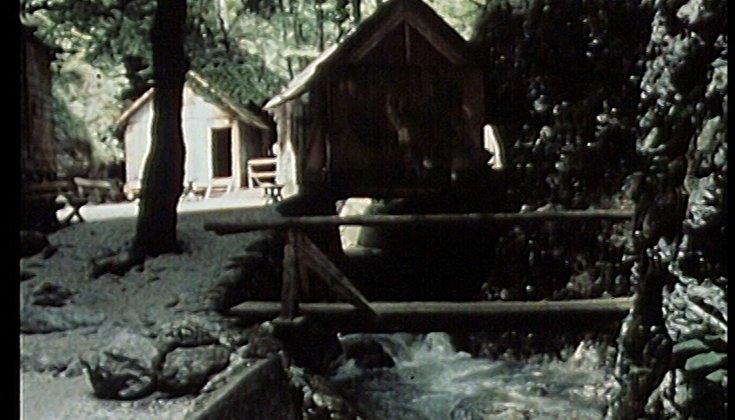
The feature film comprehensively presents the setup and operation of the famous Partisan hospital Franja, both through breathtaking footage of the environment in which it was established, and through archival photographs, documents, and moving testimonies – including a long interview with its director, Dr. Franja Bojc-Bidovec. In the first part, it also comprehensively and concisely presents the entire Partisan medical and care infrastructure and the challenging journey to its establishment and maintenance – the result of which was the hospital Franja, which was not discovered by the occupier until the end of the war. While in the film Žerjavi letijo na jug, it is logical that the focus is on a female narrative, and the choice of the theme itself already spoke of Dorica Makuc's sensitivity towards it. In the film Prečuden je cvet v grapi črni, it was by no means obvious that the authors would place a female narrative of this extraordinary endeavor at the forefront, as male narratives or even the repatriarchalization of the National Liberation Struggle prevailed in Yugoslav cinema at the time. The exceptional opening sequence bears witness to the sensitivity of the Makuc-Janžekovič duo towards humans and their rebellious perseverance, in which they, one by one, without words, presented photographs of all 94 fallen medical workers in the National Liberation Struggle, which took them more than two minutes of film. They strictly maintain this approach throughout, so that every person whose contribution to partisan medical care is mentioned is also shown with an archival photograph, giving the film almost a memorial aura.
Thursday views – Where are you from?
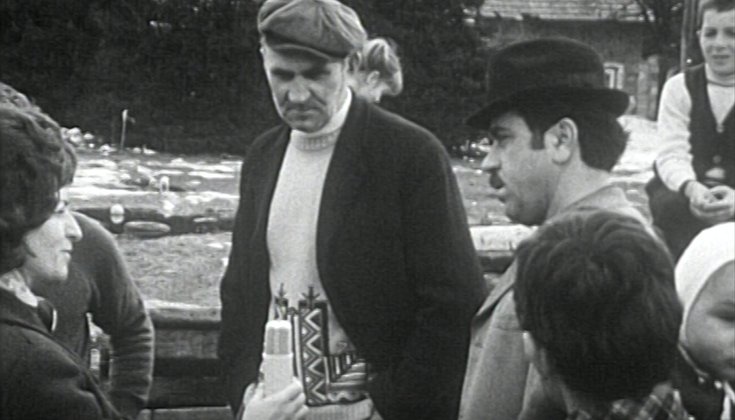
A reportage that stands out for its exceptional sense of empathy and masterful interviewing by Dorica Makuc, who talks with migrant workers in Slovenia from other Yugoslav republics. It is practically completely focused on people, both in content and form, which makes it exceptionally powerful. The interviewees are placed in their space, which tells as much about them as their answers do, and the camera is completely subordinate to the main message, emphasizing the difficult social position of immigrants and their homesickness.
The Cranes Are Flying South
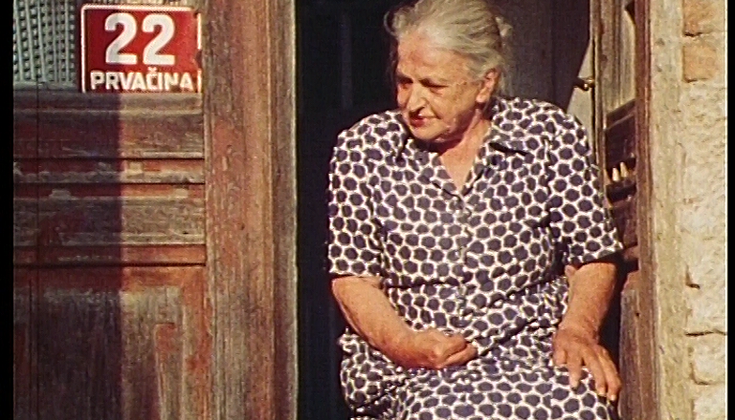
The first highlight of Dorica Makuc's documentary creation in the pioneering documentary-television period, and probably her most notable short film. In it, the camera finally gains independence; a new element that raises the whole work, both journalistically and historically, to a higher quality level and became a hallmark of the Makuc-Janžekovič duo in all future works, is the thoroughly researched, previously untold story of the so-called Aleksandrinke – women from Primorska who, due to their families' difficult social situation, had to go to work in Egypt. With this milestone in Slovenian documentary filmmaking, which Makuc reinforced two decades later with the book Aleksandrinke (1993), the story of Slovenian wet nurses, maids, governesses, cooks, and other overseas workers entered the consciousness of the entire Slovenian nation and essentially became part of our history and, thus, also our identity.
© Please respect the copyrights.