
Anja Medved and Nadja Velušček: Zone of Transition
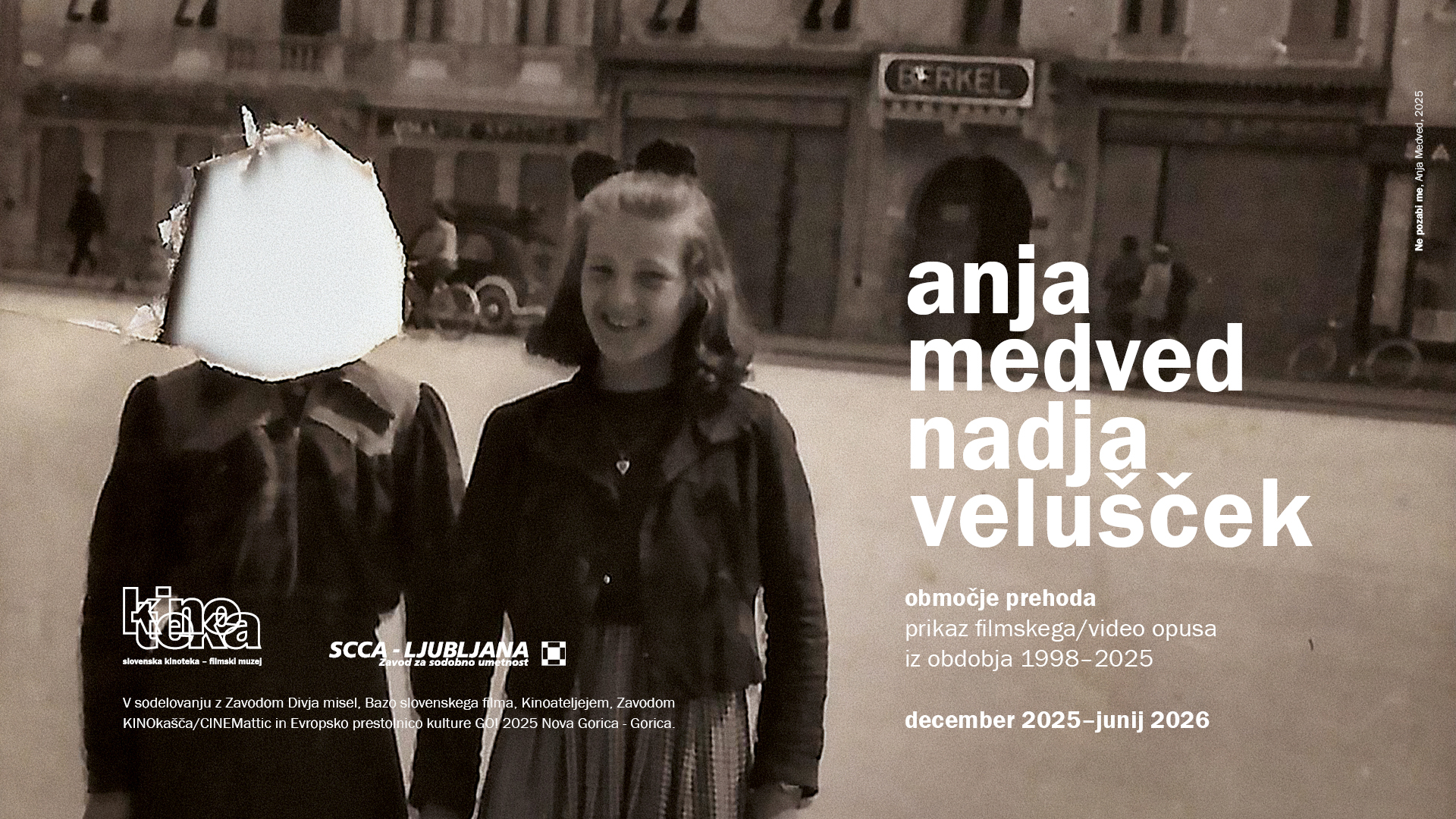
Anja Medved (1969) and Nadja Velušček (1948) are mother and daughter who have been working together as a creative duo since 1998, when they made the short documentary film Cvetoča Brda (Blooming Brda) for RAI television. Their joint creative work began at Kinoatelje in Gorizia, founded in 1977 by sociologist Darko Bratina, for whom film was a means of gaining a deeper understanding of society. Due to the need for cross-border cooperation, the Kinoatelje Institute was also established in 2000 on the Slovenian side in Nadja Velušček's house in Šmihel. She had been involved in developing the program since the early 1990s, and Anja Medved joined a few years later, after completing her studies in theater and radio directing at AGRFT. In recent years, they have been working within the framework of the KINOkašča/CINEMattic institute based in Šmihel near Nova Gorica, where the renovated attic is becoming a micro cinema. Nadja Velušček usually does fieldwork and conducts interviews with people during film production, while Anja Medved takes over the directing and editing process.
The films of Anja Medved and Nadja Velušček are, according to Andrej Šprah's classification, mostly compilation documentaries. The structure of their films is rhizomatic and non-hierarchical: the narrative voices multiply to such an extent that the narrative is not "controlled" by a dominant perspective, but rather creates a network of multiple voices that come together in a cubist mosaic: Such polyphony is an authorial strategy that can only be used to delineate the field that these voices traverse, each understanding, appropriating, and using it in their own way and narrating about it—and only in this way can landscape entities such as Nova Gorica, Gorizia, Soča, Goriška Brda, and Benečija speak through their films.
As Anja Medved mentions, this view is a result of living on the border and attempting to give a voice to the border, to the borderline. And as Ervin Hladnik Milharčič notes in Mesto na travniku (Town on the Meadow), there are always at least two truths at the border: Soča is Isonzo, the Miracle at Kobarid is the Disaster at Kobarid, Nova Gorica becomes old Gorizia after crossing the Europe Suare... The border area is therefore, by definition, a place of many voices and thus opens up to history – or microhistory – from a bottom-up perspective. The work of the author duo Velušček-Medved consists of stories and vivid testimonies of ordinary individuals who are not part of grand historical narratives, personalities, events, and textbook facts, but are located in a kind of infraspace beneath the surface of what has become historical Truth through the process of signification.
It is also worth emphasizing the rich use of public and institutional archives, but above all personal and family archives, which are also entering the public space for the first time through filmmaking. At the same time, the creative credo of the duo Velušček-Medved is precisely the creation of archives and testimonies: film, as they say, becomes a by-product of the creation of archives and not the other way around. At the same time, they use various procedures to travel through different uses of archival and video material, including their own, and by duplicating images in different contexts, they make it visible how images are repeatedly appropriated for the purpose of a particular narrative or effect.